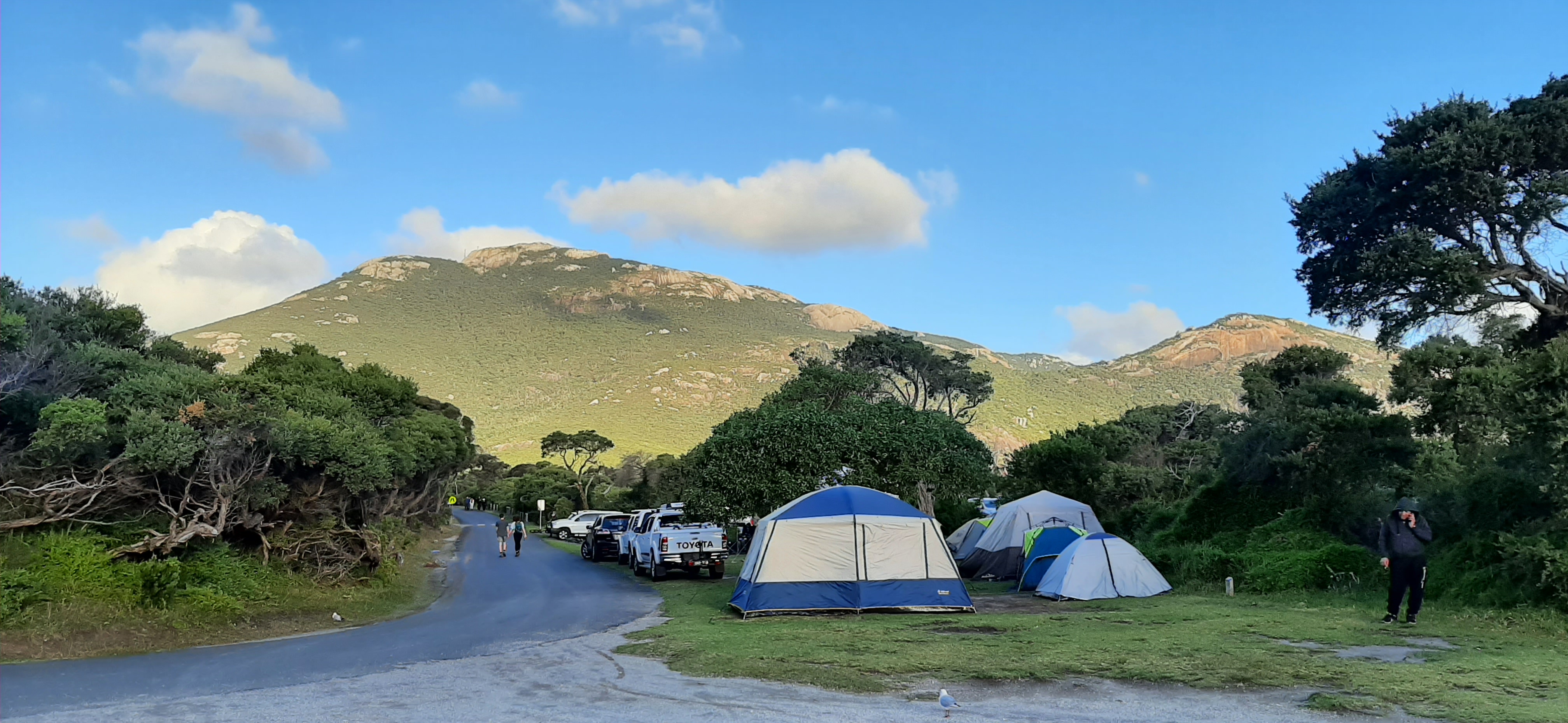
Photo by Snap Wander on Unsplash
April 5, 2026
•
Updated September 23, 2026
•
15 min read
•
AustraliaAustralian camping booking systems: a state-by-state guide
Daniel Thareja
Founder
If you've ever tried to book a campsite in Australia and found everything booked out, the booking system itself might be the reason you missed out.
Australia doesn't have a national campsite booking system. Each state and territory runs its own platform, with its own rules, release schedules, and quirks. Victoria uses a Lobby and Virtual Waiting Room with random selection on quarterly release days. Western Australia drops Ningaloo campsites on the first Tuesday of every month. Tasmania releases Overland Track permits once a year in July, and in 2026 the peak months were gone the same day. If you don't know how the system in your target state works, you're already behind.
This guide covers all eight states and territories: how each booking system works, when sites are released, and what to do when your dates are already booked out.
Victoria: Quarterly releases and virtual waiting rooms
Most people assume Victoria's campsite booking system is first-come-first-served. For high-demand campgrounds, it's actually a randomised queue. Parks Victoria says peak season isn't a ballot, but the random draw at 10am has a similar practical effect.
How Parks Victoria's booking system works
Most Victorian national park campsites are booked through Parks Victoria's online booking system at bookings.parks.vic.gov.au. Bookings are released quarterly, approximately 6–9 months in advance.
The Great Ocean Road is the exception. Since 1 July 2026, campgrounds in the Great Otway National Park, including Blanket Bay, Johanna Beach, Aire River and the Great Ocean Walk's seven hike-in sites, are booked through GORCAPA instead. Our Great Ocean Walk camping booking guide explains its separate night-by-night itinerary process.
You can book a maximum of 3 sites per transaction. Parks Victoria cut the limit from 10 to give more people a chance at a site in peak periods. On 1 July 2025 the Victorian Government brought back half-price camping fees at 131 bookable campgrounds for two years, through June 2027. In my view that has made popular sites even more competitive.
The lobby system explained
For high-demand releases, particularly Tidal River at Wilsons Promontory, Parks Victoria uses a Lobby and Virtual Waiting Room. The Lobby opens before 10am Melbourne time on release day. At 10am sharp, everyone in the Lobby is randomly assigned a queue position. It's not about who clicks fastest. It's a lottery.
Banksia Bluff at Cape Conran uses the same release system, with extra seven-night and Saturday-turn rules over Christmas.
This is the key detail most campers miss. Refreshing the page at 10am sharp won't give you an advantage over someone who joined the Lobby five minutes earlier. The randomisation means your odds are the same either way, as long as you're in the Lobby before 10am.
For Tidal River specifically, peak-season releases are heavily oversubscribed, with far more groups trying to book than there are sites available. For the cross-system playbook on how to win in a virtual queue, including the multi-browser tactic and the post-launch recovery window, see our opening day booking queue tips.
When bookings open
Parks Victoria releases bookings quarterly. The exact dates shift slightly each year, but the pattern is consistent: sites for approximately 6–9 months out become available at 10am Melbourne time on set release days. Mark the release dates in your calendar and set an alarm. Once sites are gone, your only option is to watch for cancellations.
Releases come in stages over three days. The next one opens stays from 1 March to 30 June 2027, at 10am AEST each day. Tidal River goes first on Monday 28 September 2026, roofed accommodation on Tuesday 29 September, and all other campgrounds on Wednesday 30 September. Summer stays through 28 February 2027 are already on sale.
Cancellation policy: 100% refund if you cancel 30 or more days before arrival. 50% between 8–29 days. Nothing if you cancel less than 8 days out. This creates a predictable pattern: cancellations tend to cluster around the 30-day mark as people lock in their final plans and decide whether to keep or release their bookings.
If you're watching for Tidal River cancellations, that 30-day window before your target dates is when you're most likely to see sites reappear.
New South Wales: Rolling windows and weekend wars
NSW is the opposite of Victoria. NPWS documents no ballot, no quarterly release day and no waiting room. It's a straightforward rolling window, and that makes it a speed game.
How NSW National Parks bookings work
NSW has more than 350 campgrounds booked through NSW National Parks' online booking system. As far as I can tell, sites become available on a rolling basis. NPWS doesn't publish one statewide booking window, so open your campground's availability calendar and find the last bookable date. That date moves forward as the window advances.
Kosciuszko adds one important distinction: named NPWS campgrounds need a reservation, while permitted remote backcountry camping does not use the campsite booking system. Our Kosciuszko camping bookings guide explains the boundary and the alpine restrictions.
This means new availability trickles in over time as the booking window advances. There's no single "drop day." The most organised campers check regularly and snap up dates as they appear.
Refund policy and the proposed overhaul
As of September 2026, NSW National Parks refunds 75% if you cancel 31 or more days before arrival and 50% within 30 days. The 2.5% booking fee isn't refunded when you cancel, only if NPWS cancels your booking (for example, a park closure). The 31-day mark is when most cancellations happen as people lock in plans before the refund tier drops.
NSW has proposed a bigger change, but it isn't in force. A 2025 consultation paper would drop the booking fee and return up to 80% of fees, as a credit or refund, if you cancel at least 3 days out, and 50% after that. It would also replace per-person charges with six per-site price tiers, each with a low and high season rate. No start date had been announced as of September 2026, so plan around today's rules. Our NSW cancellation overhaul explainer covers what the proposal would change.
Why coastal campgrounds are a battleground
The booking system is simple, but the demand isn't. NSW's coastal campgrounds, particularly along the South Coast and Sydney fringe (Ku-ring-gai, Bouddi, Illawarra), book out months ahead.
Depot Beach in Murramarang National Park, about 3.5 hours south of Sydney, books out months in advance for weekends and school holidays. Kangaroos wander through camp, the beach is a short walk through coastal forest, and it's close enough to both Sydney and Canberra that demand never lets up. For a full breakdown, see our Depot Beach booking guide.
Then there's The Basin at Ku-ring-gai Chase National Park: 114 tent sites reached only by ferry or water taxi from Palm Beach, by private boat, or a steep 2.8km walk from West Head Road. It's on Sydney's northern edge, so weekend bookings are competitive year-round, not just during holidays.
With no ballot to even out the odds, getting a site at these campgrounds comes down to knowing when availability opens and checking often. Unlike Victoria, there's no randomisation to level the playing field. The person who checks first, books first.
The rolling window does mean new dates appear daily. If you're flexible on dates, checking regularly can pay off. NSW National Parks documents no waitlist or cancellation alert, so a site someone cancels only turns up if you happen to check the availability calendar.
Tasmania: Annual releases and daily quotas
Tasmania runs things differently from the mainland. Standard campground bookings are relatively straightforward, but the state's iconic multi-day walks operate on strict annual permit systems with hard daily limits.
Overland Track: the July release and the 34-walker limit
The Overland Track is a 65km trek from Cradle Mountain to Lake St Clair, typically completed in six days. In 2026, the peak-month permits were gone on opening day.
During the peak season (October 1 to May 31), the track is one-way only (southbound from Ronny Creek), and up to 34 independent walkers can start each day. Guided and group walkers are booked separately.
The 2026/27 pass costs $312 per adult and $272 per child or concession, and includes park entry for the duration of your walk. Bookings for the entire summer season are released once per year on the first Tuesday of July. The 2026/27 season opened on Tuesday 7 July 2026 at 9am AEST. Tasmanian press, citing the state's parks department, reported December to March fully booked by 2pm that day.
Overland Track permits are booked through a dedicated portal on the Parks Tasmania website, separate from standard campground bookings. If you're searching the general campground pages, you won't find them. For a full breakdown, see our Overland Track 2026 booking guide.
How to book the Three Capes Track
The Three Capes Track is a 48km coastal walk in Tasman National Park with purpose-built cabins at each overnight stop. Unlike the Overland Track, bookings are taken year-round through a dedicated availability calendar rather than one annual drop. The current standard fare is $650 per adult. There is no waitlist; our Three Capes cancellation guide explains when altered places may return and the current refund rules.
Standard Tasmanian campgrounds
Outside the major walks, Tasmanian campground bookings are generally less competitive than the Overland Track. The booking process varies more than people expect, though. Freycinet's main campgrounds (Richardsons Beach, Honeymoon Bay and Ranger Creek) use a ballot for peak summer (18 December to 10 February) and Easter, and Parks Tasmania describes no online booking for them. The ballot is drawn in early August each year, one entry per group, with a 10-night maximum. Off-season Freycinet bookings are made by phone or email to the visitor centre. Bay of Fires campgrounds are free and need no booking, so it's first come, first served. Always check the specific campground's page on parks.tas.gov.au before assuming you can book online.
Western Australia: Monthly drops at Ningaloo
Western Australia changed how Ningaloo camping bookings work in 2026. The standard system still applies everywhere else, but Ningaloo now runs on an entirely different model.
Standard WA bookings
WA's bookable national park campgrounds are booked through Park Stay WA, DBCA's booking site. Outside Ningaloo, the standard booking window is 180 days (about six months), on a rolling basis.
The latest bookable arrival date moves forward one day at midnight AWST. For less popular campgrounds, that's fine. For high-demand parks like Cape Le Grand and Karijini, it means racing other campers for peak dates the moment they roll into the window at midnight. Ningaloo used to work this way too.
The Ningaloo monthly block release
On 3 February 2026, WA Parks launched a trial system for Ningaloo Coast campgrounds. Instead of the rolling 180-day window, campsites across Cape Range National Park and surrounding areas are now released in monthly blocks. On 15 September 2026, DBCA announced that the monthly release will continue permanently after an eight-month trial.
Here's how it works:
- When: First Tuesday of each month at 10am AWST
- What: About a month of stays, six months ahead. Blocks don't follow calendar months exactly; DBCA adjusts them so weekends, public holiday weekends and WA school holidays aren't split
- Next: Tuesday 6 October 2026 at 10am AWST, for stays from 1 April 2027
- Where: Cape Range NP (10 campgrounds), Nyinggulara NP, which DBCA lists as "ex-Ningaloo" (5 campgrounds), and Warroora Coast in the Nyinggulu Coastal Reserves (11 campgrounds). The Nyinggulara campgrounds have been closed since Cyclone Narelle, with no reopening date as of September 2026
The old system caused chaos. People would set alarms for midnight, refresh repeatedly, and race to grab sites the moment they appeared. The monthly block system consolidates that into a single, predictable release: one day per month, during business hours.
If you've camped at Ningaloo before, the midnight scramble is gone. Instead, you need to know which Tuesday to show up and be ready at 10am sharp. If you miss the drop for your target month, cancellations from other campers are your best fallback.
Why Osprey Bay is the one to target
Osprey Bay is the campground most people want at Ningaloo. Its 46 sites sit beside the beach next to the Osprey Sanctuary Zone of Ningaloo Marine Park. If Osprey Bay is your first choice, I'd book it first when the release opens and pick a backup campground second.
Lucky Bay at Cape Le Grand National Park, famous for the kangaroos that lounge on its beach, operates on the standard 180-day rolling window with 56 unpowered sites. You still book ahead, but sites are unallocated: you pick from the vacant sites when you arrive. Getting a booking at all during school holidays is the hard part.
Missed out on a campsite in Victoria, NSW, Tasmania, or WA? Set up a cancellation alert and Schnerp will watch for openings.
Queensland: Permits, islands, and trail quotas
Queensland takes a different approach: you need a pre-booked, paid camping permit to camp anywhere in Queensland's national parks, state forests, and recreation areas. No permit means no camping.
How QPWS camping permits work
All Queensland camping permits are managed through the Queensland Parks and Wildlife Service (QPWS) booking system at book.parks.qld.gov.au, which replaced QPWS's previous booking platform on 6 February 2025. It covers around 490 camping areas across the state. Since 1 July 2026 a permit costs $7.75 per person per night or $31 per family per night; QPWS says fees increase slightly each July or August. (QPWS sits within DETSI, the Department of the Environment, Tourism, Science and Innovation.)
Permits are available on a rolling basis up to 12 months ahead: the last night of your stay must fall within 12 months of today. The exceptions are Capricornia Cays and the Thorsborne Trail, below. In my experience popular island campgrounds and trail permits book out months ahead, and QPWS itself advises booking at least six weeks ahead for the most popular spots.
K'gari (Fraser Island): about 35 camping areas, one island
K'gari has about 35 separately booked camping areas spread across the island. They're a mix of nine numbered eastern beach zones and named camping areas, including dingo-fenced campgrounds at Central Station, Dundubara and Waddy Point Top. Each area is booked as a separate facility in the QPWS system, which makes planning a multi-day trip frustrating. You need to check availability and book each stop individually.
In my experience the most popular sites (Central Station, Dundubara, Waddy Point) book out well ahead for school holidays, especially the June–July and September–October breaks.
Thorsborne Trail: 12 new starters per day
The Thorsborne Trail on Hinchinbrook Island is a 32km coastal walk. QPWS is trialling a limit of 12 hikers starting each day, replacing the old cap of 40 people on the trail at once. Seven camping areas are spread along the route, but you don't book them individually. Each group of up to 6 books one Thorsborne Trail Pass for 2 to 5 nights.
For 2026, Thorsborne moved to a "hiking season" booking model. All permits for the 1 March to 31 December 2026 season were released in one drop on 16 December 2025 at 10am QLD time. Most QPWS campgrounds use rolling availability instead. Permits for the whole 2027 season (1 March to 31 December) release on Tuesday 15 December 2026 at 10am Queensland time. QPWS warns that peak-season (May to September) permits will sell out within an hour. From 2027 you must cancel more than 14 days before your start date to get a refund, up from 2 days.
Capricornia Cays (Lady Musgrave, North West, Mast Head) also moved to a booking-season model in 2026, with quarterly releases up to 9 months ahead at 10am AEST on a Tuesday. The next one is Tuesday 1 December 2026, for stays from 1 September 2027. Other trail and standard campground bookings remain rolling.
If you're planning a Hinchinbrook trip and missed the December drop, cancellations are your best route in.
South Australia: Smaller parks, still competitive
South Australia's national parks are managed by NPWS South Australia, with campsites booked through the government-run Book and pay system on parks.sa.gov.au. NPWS SA says you can reserve a campsite up to 12 months in advance. The system is less complex than the eastern states, but don't assume that means availability is easy.
Harvey's Return at Flinders Chase National Park on Kangaroo Island has just 8 sites. In my experience those 8 sites go fast during school holidays and summer. The campground was originally a supply landing for Cape Borda Lightstation, and NPWS SA recommends a 4WD because the gravel road in can be quite corrugated.
SA's smaller campground capacities mean that even moderate demand can fill a park completely.
Northern Territory: Dry season or nothing
The Northern Territory's camping season is dictated by weather more than any other state. Many remote and 4WD campgrounds close in the wet season when roads become impassable. In Litchfield, NT Parks says you can usually only reach the 4WD Central Valley area between May and November. Florence Falls is one of the more accessible options: NT Parks says its 2WD and caravan campground is accessible to all vehicles. The dry season (May–October) is when most sites open and the popular ones book out.
In NT parks and reserves you must book and pay online for designated campsites and some multi-day walks through parkbookings.nt.gov.au before you go, and you can't pay at the park. A few privately managed campgrounds are the exception. Campsites open up to 6 months ahead, and the Larapinta Trail and Tabletop Track up to 12 months.
The Jatbula Trail is a 62km walk from Nitmiluk Gorge to Leliyn (Edith Falls) through the Top End. You camp one night at each of five campsites, each capped at 15 people and set near a spring or cascade with permanent fresh water. Permits for the June–September season open in early February. The 2026 season opened at 9am ACST on Tuesday 3 February 2026, and popular dates go quickly. NT Parks hadn't published a 2027 opening date as of September 2026.
ACT: Canberra's backyard
The ACT has one major national park, Namadgi, on Canberra's southern edge. Its bookable vehicle campgrounds are Honeysuckle, Orroral and Mt Clear, all booked through the ACT Parks online booking portal. Orroral is 19km south of Tharwa and Mt Clear is 47km, the last 17km unsealed.
Orroral is a small campground in the Orroral Valley with tent sites for small groups and up to three caravan or camper-trailer sites. The Orroral Heritage walking track starts at the campground, and the old Orroral Tracking Station site is a short drive away (6km). With so few sites, I'd book early for weekends and public holidays, when Canberra residents want a quick overnight escape without the drive to the coast. ACT Parks refunds 90% if you cancel 8 or more days out and nothing within 7 days.
What to do when a campsite is booked out
Every booking system in Australia has one thing in common: cancellations happen. People change their plans, and sites that were booked months ago reappear with little warning.
The problem is that cancelled sites go back into the booking portal silently. Parks Victoria, NSW National Parks and Park Stay WA document no waitlist or cancellation alert. Parks Victoria says a cancelled site "becomes available immediately" and asks you to keep checking. The site just reappears on the website, and whoever happens to be checking at that moment gets it.
Schnerp monitors campsite availability across Parks Victoria, NSW National Parks, Tasmania Parks, WA Parks, Queensland Parks, and more, checking every few minutes, around the clock. When a cancelled site matches your dates, you get an alert with a direct link to book it.
If you've missed out on a booking at any of the campgrounds in this guide, set up a cancellation alert and let Schnerp watch for you. Your first 10 notifications are free.
Quick reference: Booking systems at a glance
| State | Platform | Booking window | Release style | Key thing to know |
|---|---|---|---|---|
| VIC | Parks Victoria | 6–9 months | Quarterly release + Lobby/Virtual Waiting Room | Lobby + random selection for high-demand sites at 10am Melbourne time |
| NSW | NSW National Parks | Per campground | Rolling | No documented ballot. Fee and refund overhaul proposed, no start date |
| TAS | Tasmania Parks + Overland Track portal | Per walk | Overland: annual release. Three Capes: year-round bookings | Overland Track has its own portal. Freycinet uses a ballot for peak summer and Easter |
| WA | Park Stay WA (DBCA) | 180 days | Rolling + Ningaloo monthly release (permanent since Sep 2026) | Ningaloo: first Tuesday of each month at 10am AWST. Nyinggulara sites currently closed |
| QLD | QPWS (book.parks.qld.gov.au) | Up to 12 mo | Rolling (Thorsborne + Capricornia Cays now bulk release) | Permit required for all camping in parks and forests |
| SA | NPWS SA (Book and Pay) | Up to 12 mo | Rolling | Small capacity parks. 8 sites at Harvey's Return on Kangaroo Island |
| NT | NT Parks (parkbookings.nt.gov.au) | Up to 6 mo | Rolling | Many remote sites close in the wet. Jatbula: 15 people per campsite, permits open early Feb |
| ACT | ACT Parks (online portal) | Not published | Rolling | Three Namadgi campgrounds. 7-day max booking, 90% refund 8+ days out |
Stop refreshing. Start camping.
Schnerp watches for cancellations across Canada, Australia, and New Zealand, and alerts you the moment a spot opens up.
More from Australia
Conto campground booking: Conto and Boranup in summer
Conto and Boranup book on Park Stay WA up to 180 days ahead. When the summer holiday nights opened, how cancellations work, and how to catch one.
Hardest Ningaloo campsites to book: 2026 cancellation data
Which Ningaloo coast campgrounds actually free up? Schnerp's 2026 data on how often watchers got an opening at Osprey Bay, Bungarra, 14 Mile and more.
Buchan Caves, Bear Gully and Mount Buffalo camping bookings
Buchan Caves, Bear Gully, Lake Catani and Wingan Inlet: when Parks Victoria opens dates, each camp's peak stay rules, and how to catch a cancellation.